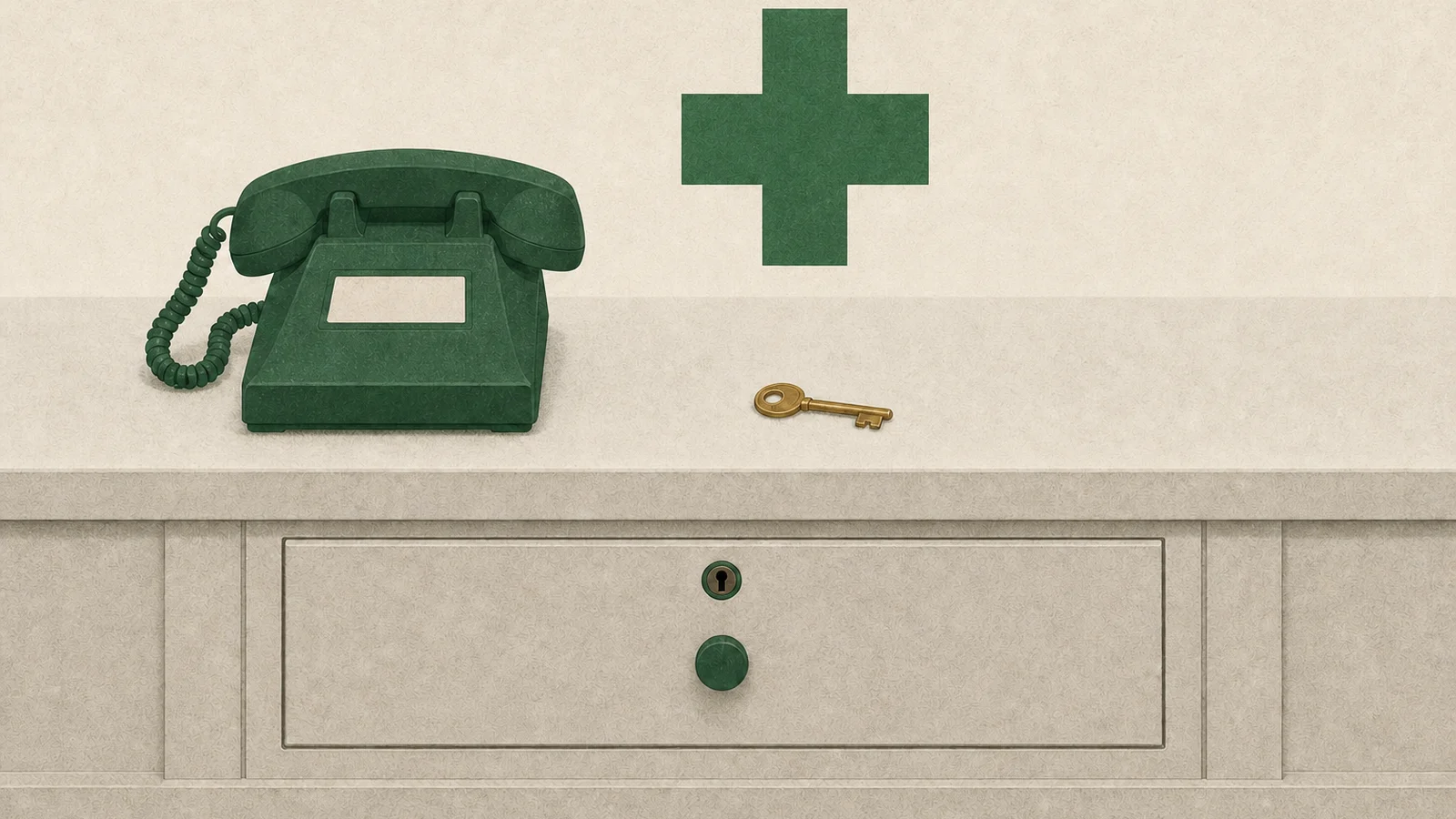
It is 8:31 on a Tuesday. The front door opened a minute ago.
Two patients are at the desk. One is early for a hygiene appointment. One has lost a parking ticket. The card machine wants an update. The dentist needs to know if the 9:00 has confirmed.
And the phone rings. Then the second line rings.
Your receptionist looks at the phone. Then at the patient in front of them. They smile at the patient. That is the right choice. The person in front of you comes first.
The phone stops ringing.
Nobody writes it down. By 9:30 the call is forgotten. But somewhere in Cardiff or Swansea, a person who wanted a private check-up has put the phone down. They did not leave a message. They are ringing the next practice on the list.
This article is about that call. Not about blaming your team. About finding out how many calls fall through the gap, and what you can do about it this month, mostly for free.
Why the phone matters more for a private practice
An NHS practice with a waiting list can miss a call. The patient will ring back, because there is nowhere else to go.
A private practice is different. Your new patients are shopping around. They often ring two or three practices in one sitting. Whoever answers first, and can offer a time, usually gets the booking. The others never know the patient existed.
And each new private patient is worth a lot. Every practice's numbers are different, but as an example:
- A new general private patient might be worth around £400 in their first year (exam, hygiene, a filling).
- A new Invisalign patient might be worth around £3,500 or more.
These are examples only. Use your own figures.
So one missed call at 8:31 is not one missed call. It might be one missed patient, for years.
What the evidence says
I could not find a public study of missed calls at UK dental practices. So here is what there is. Most of it is about GP practices and clinics, not dentists. I say so each time.
Getting through on the phone is hard in healthcare. In England, 52.9% of patients said it was easy to contact their GP practice by phone. That means about 47% did not find it easy (GP Patient Survey 2025, Ipsos for NHS England, 702,837 responses). "Not easy" does not mean they never got through. But it is nearly half.
It is the same story in Wales. 33% of people in Wales found it difficult to book a convenient GP appointment. Getting through on the phone was the most common reason (National Survey for Wales, 2021–22). Again, GP practices. But it shows what patients in Wales expect when they ring to book healthcare.
Most people will not leave a voicemail. In a 2023 survey of 2,000 UK and US adults, 54% said they will not leave a voicemail if they cannot get through. 38% said they would go elsewhere after a poor call (Moneypenny / Censuswide, 2023). This is about businesses in general, not dentists.
More people are paying privately. 32% of people in England used private dentistry in the last year, up from 22% in 2023 (Healthwatch England). That is England, not Wales. But more people are looking for a private dentist, and most start by ringing one.
And dental practices do miss calls. In the US, one industry article said nearly a third of calls to dental offices are missed (Dental Economics, 2018). That is old US data, not a UK fact. It is the only dental figure I found.
The three danger times
Missed calls bunch up in three places.
1. The 8:30 rush. Patients arrive. People ring to cancel, or to book before work. Your team does three jobs at once.
2. Lunchtime. Your team needs a break, so the phone goes to a message. But lunch is when many working people make their own calls.
3. After six, and at weekends. This is when people who work 9 to 5 have time to sort out their teeth. If the answer is "please ring back in the morning", many will not.
Ring your own practice tonight at 7pm
It is the simplest test there is, and it is free. Ring your practice at 7pm from your mobile, as if you were a new patient. Then answer honestly:
- Did anyone or anything answer? Or did it just ring?
- Could I book an appointment? Or only leave a message?
- Was I told when to call back? With the actual opening time?
- Was there a way to book online? Did the message say where?
- Could I have done this in Welsh? If I had wanted to?
- Would I wait for a call back? Or would I ring the next practice?
Then do the same at 12:45 one day next week, and at 8:35 one morning. Three calls. Ten minutes. You will know more than any report can tell you.
Six fixes any practice can do
None of these need new software. Some cost nothing at all.
1. Count your missed calls every week. Most practice phone systems can show missed calls. Ask for the report every Monday. Look at when they happen, not just how many.
2. Call back the same day. Give one person the job of ringing back every missed number the same day. Tomorrow is often too late.
3. Cover the rush and lunch. Stagger lunch breaks so one person is always on the phone. In the 8:30 rush, if you can, let one person own the phone and the other own the desk. Even 30 minutes of cover makes a difference.
4. Fix your after-hours message, and add online booking. Say your opening hours, how to book online, and what to do in an emergency. Keep it short. Put your online booking link on your website, your Google listing and in the message. Many new patients would happily book themselves at 9pm.
5. Take deposits on private consultations, and send reminders. A small deposit on a private consultation or Invisalign assessment helps cut no-shows. So do text reminders that let the patient confirm or move the appointment.
6. Offer Welsh on the phone. Some patients prefer to speak Welsh, especially about their health. If a Welsh speaker is on your team, say so in your greeting and on your website. Record the after-hours message in both languages.
What are missed calls worth to you? A simple sum
Here is a rough way to put a number on it. Use your own figures where you have them.
Missed calls a week
  × 4.3 (weeks in a month)
  × share that are new patients
  × share of those who would have booked
  × value of a new patient
  = money at risk each month
An example only. Say your practice misses 20 calls a week. You do not know how many are new patients, so you guess 1 in 4. You guess half of those would have booked.
- 20 × 4.3 = 86 missed calls a month
- 86 × 25% = about 21 new-patient calls
- 21 × 50% = about 10 patients who would have booked
- 10 × £400 = about £4,000 a month
That is an estimate, not a promise. Your numbers could be lower or higher. But notice one thing: if just one of those ten patients was an Invisalign enquiry, the sum nearly doubles.
The exact figure matters less than knowing a missed call has a price.
Your next step: take The 8:30 Test
If the 7pm call made you wince, here are two free ways to go further.
Take The 8:30 Test. It is a 2-minute self-test with ten questions about your phones, call backs, after-hours cover, Welsh and online booking. You get a score, your three biggest gaps, and a rough £ estimate with the maths on screen. Take it here: loyalreceptionist.co.uk/dental/check
Book a free missed-call check. Send us last week's call report from your phone system. We will turn it into a one-page summary: how many calls were missed, when they happened, and what they might be worth. It is free, and you keep the report.
And if you want help with the calls your team cannot get to: that is what we built Loyal Receptionist for. Sarah, our AI receptionist, answers only the calls your team misses, at 8:30, at lunch and after hours. She can book the patient into your diary and take a deposit for a private consultation by sending a card payment link during the call. She speaks Welsh and English.
Sources: GP Patient Survey 2025 (Ipsos for NHS England); National Survey for Wales 2021–22 (Welsh Government); Moneypenny Customer Communications Trend Report (Censuswide, 2023); Healthwatch England (2026); Dental Economics (2018, US). £ figures in this article are examples, not averages.
Sherif Butt
Founder, Loyal Receptionist
Software engineer. Builds the AI receptionist that answers for UK clinics, trades, solicitors and salons. Based in Cardiff. Writes up whatever the call data actually says, including the parts that do not sell anything.