
Listen to this teardown
Narrated, with Sarah in her own voice ·
If you run a dental practice, a GP surgery, a vet or a physio clinic, whoever answers your phone can see the caller's number. This is about what they do with it, and what an AI receptionist should do with it.
I am a software engineer. I build Sarah, the AI receptionist in the two calls below, so I will keep to the part I know: what the machine says, and what stops it.
Caller ID is not patient verification
Your phone rings. The display says Sam. Whoever is on the desk knows Sam. Patient, check-up tomorrow, Dr Price at ten.
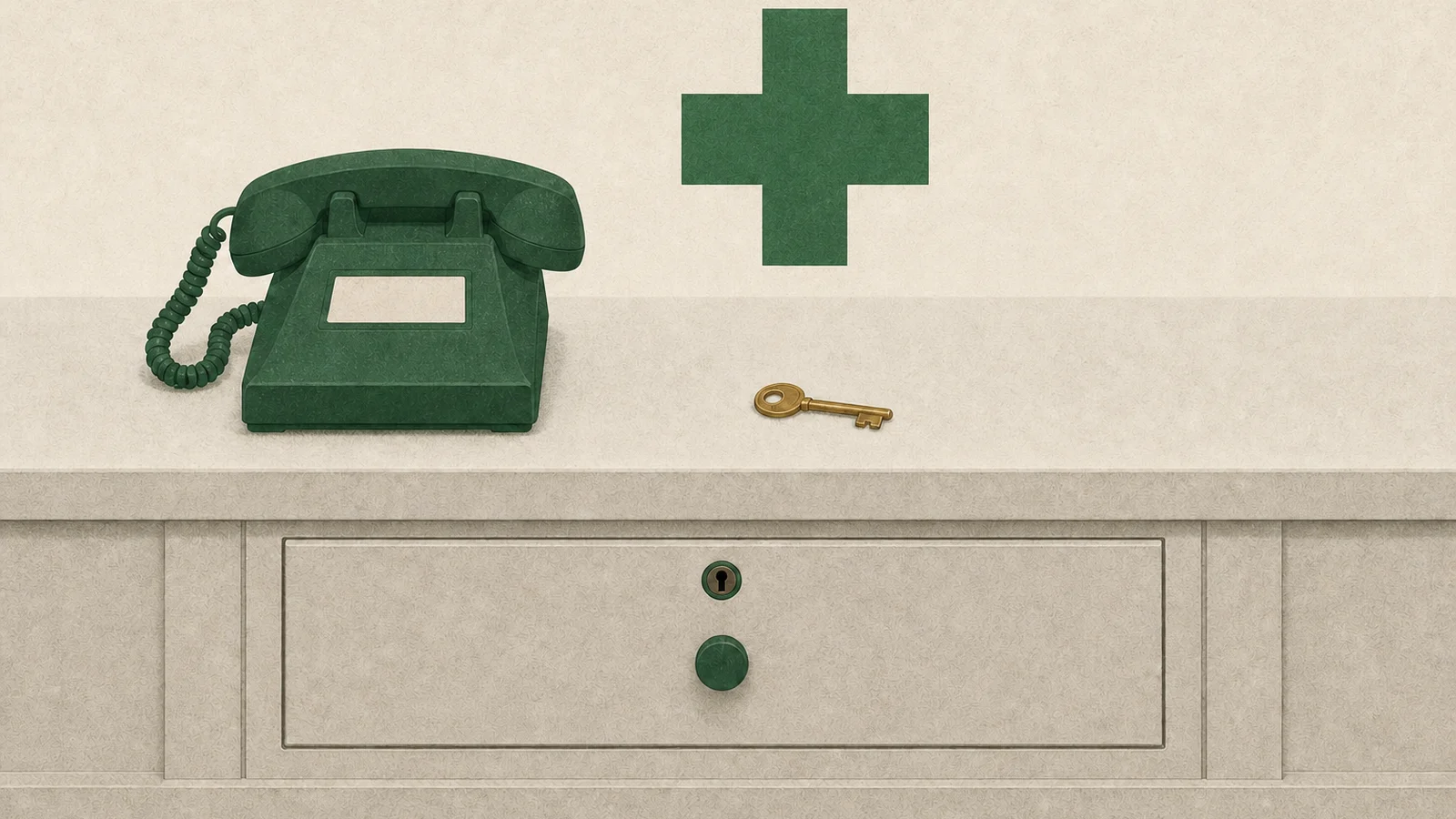
The caller display is a badge. It gets you as far as the desk. The date of birth is the key. It opens the drawer with the record in it. A receptionist who opens the drawer because she recognised the badge has mixed the two up.
Imagine borrowing your partner's phone and ringing your own front desk. If the greeting is "Hi Sam, about your appointment with Dr Price tomorrow?" before you have said a word, a stranger holding that handset now knows that Sam is a patient, who he is seeing, and when. A partner, a parent, a flatmate, an ex with the old number. None of them had to say anything. And before you say a mobile has a passcode: a landline does not. The house phone, the office switchboard, the handset by the bed in a care home. Anyone in the room can pick it up, and the display still says Sam.
You know better than I do how tightly this is regulated, so only the lines the machine has to answer to. Under UK GDPR health data is special category data, and the ICO counts "appointment details, reminders and invoices which tell you something about the health of the individual" as data concerning health. Then the GDC's standard 4.2: "You must protect the confidentiality of patients' information and only use it for the purpose for which it was given." In England a dental practice is registered with the CQC on top of both.
So "who am I seeing?" is the one question the desk cannot answer until the key is in the lock. Now put an AI receptionist on that phone. Whatever a human receptionist might let slip once a month, a machine that trusts the badge will do on every call.
An AI receptionist on two calls to a dental practice
The calls are scripted from what Sarah is built to say. A line marked security line is one the server writes for her, word for word. Press play on either call to hear her in her own voice.
That last question is the key being cut. A booking made without it cannot be verified on the next call, so she asks while she has him, and says why.
Three wrong answers and the call goes somewhere else: "That doesn't match what we have, so I can't go into the account over the phone. I'll get someone from the office to call you back." Nothing about the appointment is said. A person rings him. That is a courtesy, not a security feature. People forget things.
Why the date of birth check lives in the server, not the prompt
She did not always do this. On 20 September 2026 I compared Sarah with a rival's dental receptionist. The rival asked for the date of birth before it said a word about the appointment. Sarah, who knew the number, would have greeted him by name and read the booking straight back. She lost. The fix shipped the same day. Now she knows who is calling, and she still does not discuss his appointment until he has given his date of birth.
I could have written "always ask for date of birth first" into her instructions. I did. That is the friendly half. The half that holds is in the server: the five things she can do that touch a record, find a booking, look up a contact, move one, cancel one, read an invoice, are each refused before they run until the check has passed on that call. "Before I bring up your details, can I take your date of birth?" is not her decision. The server says it through her.
That is also the answer to the two worries the trade press raises most, where the data goes and whether the model makes things up. The record never reaches the language model until the caller is verified. A model cannot leak, or invent, a detail it was never given.
Three questions to ask any AI receptionist vendor
I read what four AI receptionists sold to UK practices say about themselves in public. One says it confirms name and date of birth. Three say nothing about identity at all. None says where the check lives or what happens on a wrong answer. So ask:
- Does it use the caller's number to greet them by name?
- Where does the check live: in its instructions, or in the system underneath?
- What does it say on the third wrong answer?
Ours: no; in the server; "I'll get someone from the office to call you back." You have just read all three.
What patient verification costs: one question
A regular who rings every month is asked for her date of birth every month, and she is not greeted by name. On the first call it feels cold. That is the point. The alternative is a receptionist who greets whoever holds your phone as you.
The phone is the way to go. But if a patient still prefers a web form, they are covered: the online booking page asks for the same date of birth, for the same reason, and from there they can reschedule, cancel or ask who they are seeing by phone. One diary. One key.
If you have followed this far, it may look simple. It is not. Getting a machine to hold that line on every call, and to fail towards a person rather than a guess, is deep engineering, and it is the part I spend my days on. I think AI is going to help a lot of patients get seen. It has to happen the right way, and the right way starts with the data. That is what Loyal Receptionist is built to do, from £149 a surgery a month.
Brightley Dental is our demo practice. It is there so you can test this yourself, and you cannot break anything. Ring it on 07426 917 705. Book an appointment, ring back from the same phone, and give her the wrong date of birth. See how she deals with you. Listen to what she does not say.
No phone to hand? Talk to her from this page.
Ask her to move an appointment
Uses your microphone. Nothing is kept.
Sherif Butt
Founder, Loyal Receptionist
Software engineer. Builds the AI receptionist that answers for UK clinics, trades, solicitors and salons. Based in Cardiff. Writes up whatever the call data actually says, including the parts that do not sell anything.